Early sanctuary
A chapel associated with the Burning Bush tradition preceded the fortified monastery built later on the site.
The historical centre of the documentary
A sixth-century monastery, a living religious community and a mountain landscape sacred across three faiths.
South Sinai, Egypt
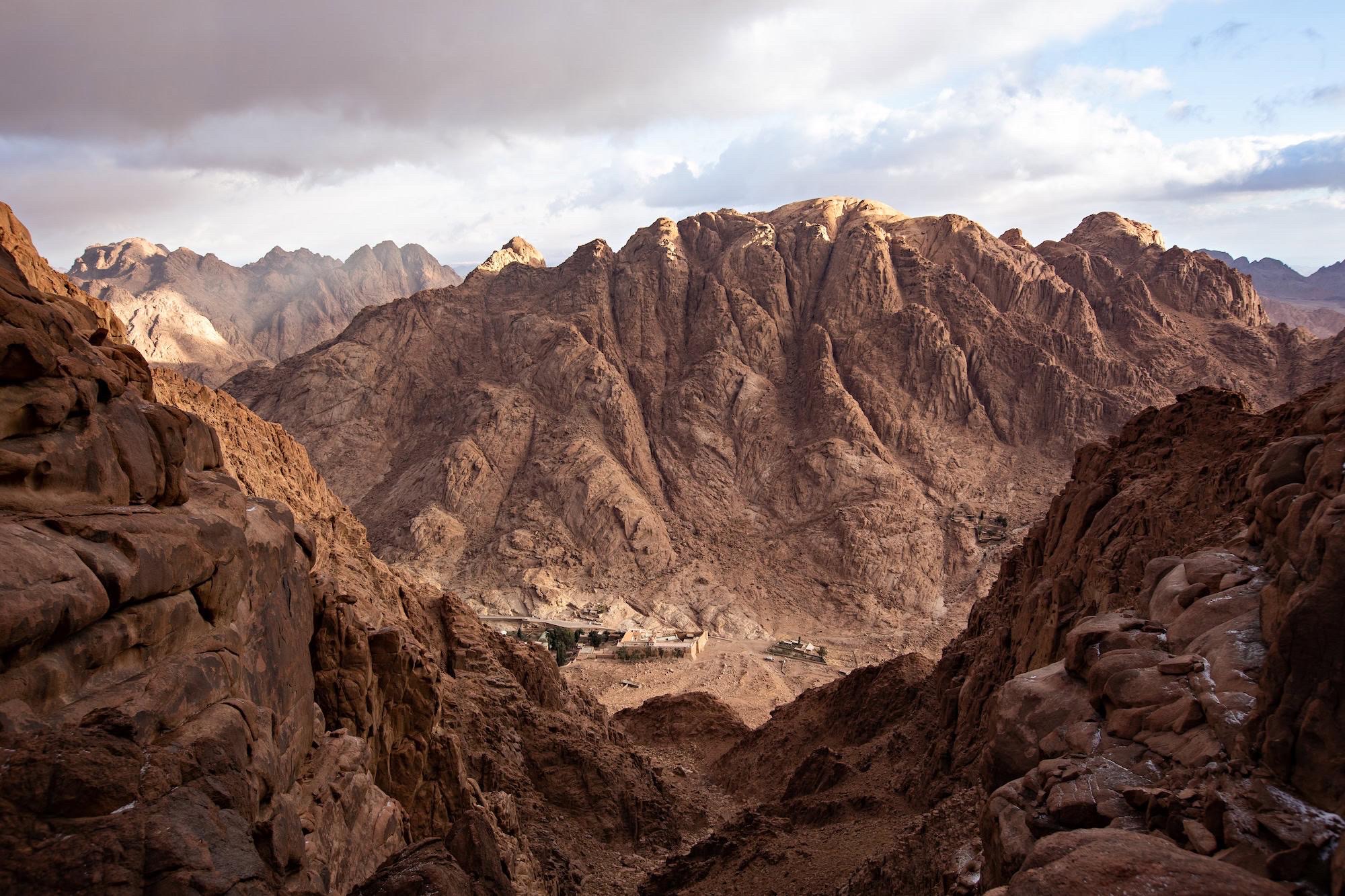
Saint Catherine’s Monastery stands at the foot of Mount Sinai, also known as Jebel Musa or Mount Horeb. The present fortified complex was built in the sixth century during the reign of the Byzantine emperor Justinian I, around a place long associated by Christian tradition with the Burning Bush.
The monastery has remained in use for its original monastic purpose for more than fifteen centuries. In 2002, UNESCO inscribed the Saint Catherine Area on the World Heritage List, recognizing the monastery’s architecture, artistic treasures, manuscript collections and relationship to the surrounding sacred landscape.
The context behind the film.
A chapel associated with the Burning Bush tradition preceded the fortified monastery built later on the site.
The Byzantine emperor Justinian I ordered the construction of the fortified monastery that forms the historic core visible today.
The site retained its original monastic function across more than fifteen centuries, making continuity itself part of its historical importance.
UNESCO inscribed the Saint Catherine Area for its architecture, cultural collections, monastic tradition and sacred relationship with the landscape.
Why the film is called The Land of Religions
The wider Saint Catherine Area is sacred to Judaism, Christianity and Islam. The mountain is connected in biblical tradition with Moses and the Tablets of the Law, while Islamic tradition also reveres Jebel Musa. Saint Catherine’s Monastery represents an enduring Christian presence within that shared geography.
The film’s title refers to the land itself: not only a location containing separate monuments, but a mountain environment through which different religious traditions have remembered, travelled and worshipped. The documentary uses the monastery as the historical centre of that wider story.
Return to the film synopsis ↗A library formed across languages and centuries.
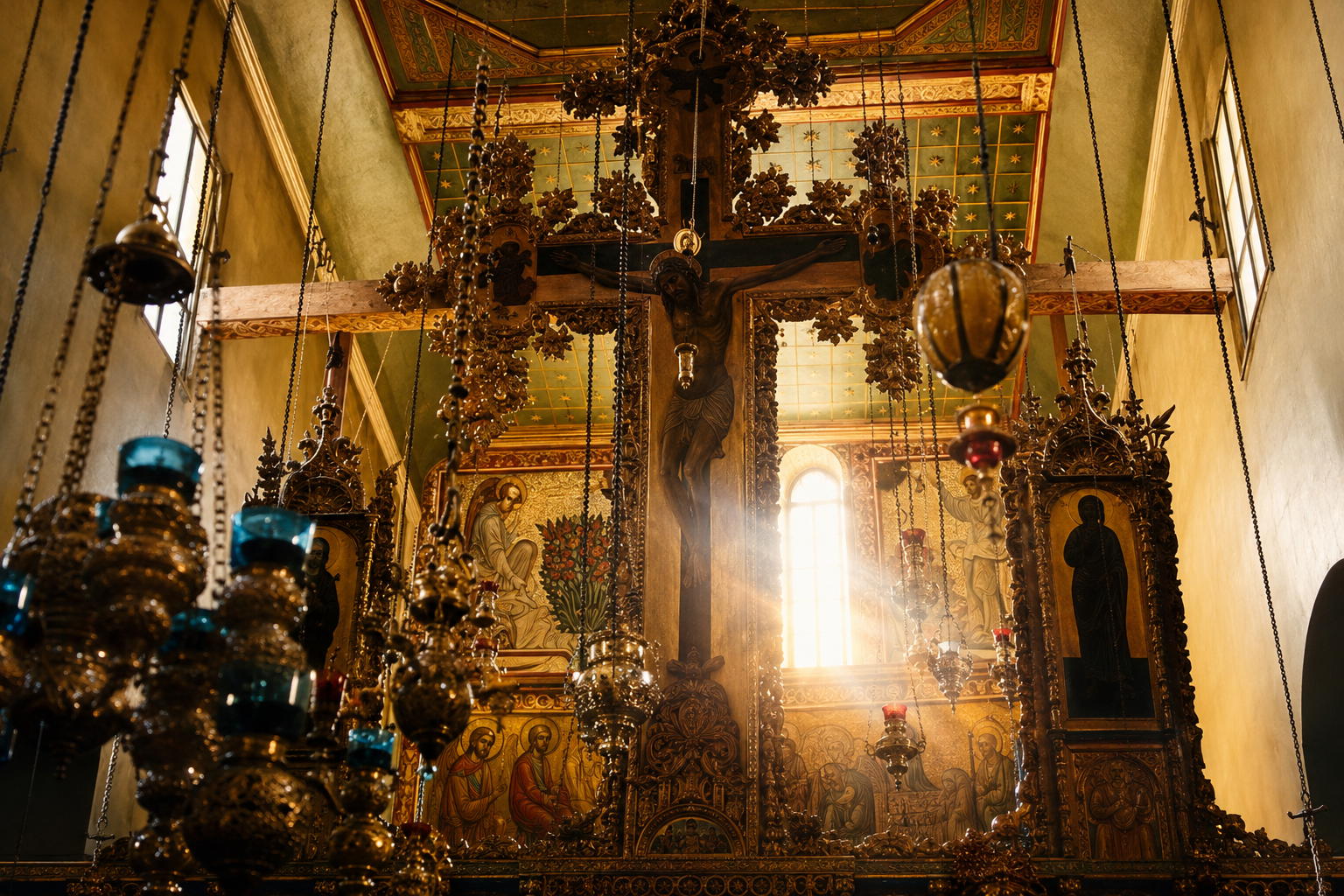
The monastery holds exceptional collections of early Christian icons and manuscripts. Its library preserves religious and secular works in Greek, Syriac, Georgian, Coptic, Armenian, Arabic, Ottoman Turkish, Ethiopic and other languages.
These materials make the monastery important not only as a religious site but also as an archive of writing, translation, law, worship and scholarship. The Land of Religions brings this material history into the same visual story as the mountains and monastic life that protected it.
In the documentary
The film moves between the scale of the Sinai landscape and the details preserved inside the monastery. Its story is structured around three connected subjects: the nature of the mountains, the monastery’s recorded history and the continuing spiritual meaning of the place.
Request the film press kit ↗